
Review · HO CHI MINH CITY
Saigon Unseen: Culture, Coffee, & Hidden Gems Motorbike Tour
Saigon shows its character best from the back of a motorbike. This four-hour ride takes you from the photogenic Pink Church to cramped alleys, a family-run café, a monastery filled with Buddha statues, and the working streets of Chinatown. I like that it gives you far more than the standard downtown sights, and I especially like the chance to talk with a local guide while moving through everyday neighborhoods.
Two details make this tour particularly appealing: the 80-year-old café stop offers a real taste of Saigon coffee culture, and the guides tailor the experience to your interests. Guides including Den, Eli, Kim, Sang, Emmy, Hani, and Soli have been praised for clear English, friendly conversation, and careful driving. The main consideration is simple: you must be comfortable riding on a scooter through busy Saigon traffic, though helmets, drivers, rain ponchos, and accident insurance are provided.
Key points at a glance
- The Thich Quang Duc Monument: Hear the story of the Buddhist monk whose 1963 protest became a major moment in Vietnam’s modern history.
- A family café with 80 years of local life: Stop for strong Vietnamese coffee and conversation with your guide.
- Everyday Saigon beyond the center: Ride through old communist-era ghettos and poorer alley districts that most sightseeing routes skip.
- Ten Thousand Buddhas Monastery: Enter a quiet religious space filled with thousands of Buddha figures.
- Chinatown and Bình Tây Market: See traditional medicine shops, temples, markets, and older colonial buildings in Chợ Lớn.
- A breezy finish by the river: End with open views and time for photographs before returning to your hotel.
Why this motorbike tour feels different
Many first visits to Ho Chi Minh City focus on the Reunification Palace, the old Post Office, Notre-Dame Cathedral, and the central museums. Those places matter, but this tour takes another route. You ride through parts of the city where people live, work, worship, trade, and drink coffee.
That difference matters because Saigon is not best understood from a coach window. On a scooter, you move quickly through traffic, but you also remain close to the street. You can watch shopfronts, alleys, markets, temples, and apartment blocks pass at eye level. The ride itself becomes part of the sightseeing.
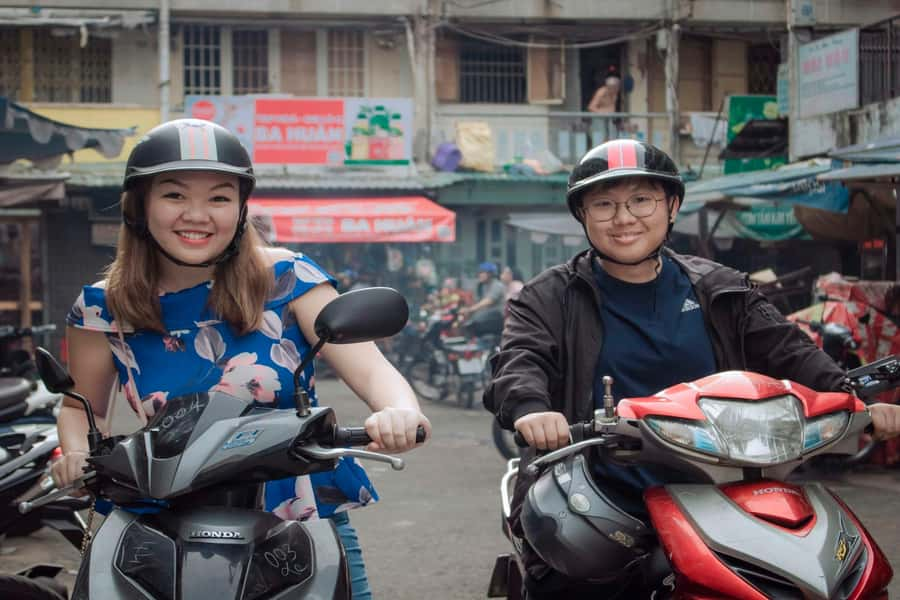
You do not drive your own scooter. A local driver takes you on the back of a comfortable, local-style motorbike. The guides wear Saigon Taste Tours uniforms and helmets with the company logo, making them easier to identify at pickup. The tour is private, so the pace and conversation can be adjusted more easily than on a large group outing.
That private format has real value for solo visitors and couples. Den, for example, tailored one solo rider’s route and spent time explaining buildings with old photographs on a tablet. Eli was also praised for being patient with a rider who felt nervous about motorbikes. You should still tell the company about any concerns before setting off, but the experience is designed around a driver-guide rather than a self-drive rental.
More Coffee Stops around Ho Chi Minh City:
- Dalat Countryside Motorbike Day Tour–Coffee Farms & Pagodas
★ 5.0 · 53 reviews - Dalat: MOTORBIKE TOUR TO PONGOUR FALLS- SILK- COFFEE FARM
★ 4.9 · 52 reviews - Dalat Group Easy Rider – Elephant Fall-Pagoda-Weasel Coffee…
★ 5.0 · 7 reviews
Tan Dinh Church and the first look at old Saigon
The route begins near District 1, with hotel pickup available in Districts 1, 3, and 4. If you are outside those districts, the meeting point is the Saigon Opera House. After a safety briefing, you settle onto the motorbike and head toward Tan Dinh Church.
Known locally as the Pink Church, Tan Dinh is an easy place to begin. Its French-colonial design and bright pink exterior make it one of the city’s most recognizable buildings. The guide explains its place in local Catholic life, adding useful context rather than leaving you with a quick photo stop.
The visit is relatively short, about 30 minutes including the ride and explanation. That is enough time to admire the exterior and hear the background without making the church the whole focus of the morning or afternoon. If you want a long architectural tour, this is not that. Instead, it works as a colorful opening scene before the ride moves into more complicated parts of the city.
Bring a camera, but do not expect every stop to feel polished or arranged for photographs. That is part of the point. The route moves between well-known landmarks and ordinary streets.
The Thich Quang Duc Monument and a painful moment in Vietnam’s history
The next major stop is the Thich Quang Duc Monument. It honors the Buddhist monk whose self-immolation in 1963 drew worldwide attention and helped change the political course of South Vietnam.
This is not simply a monument for a quick photograph. The guide explains the events surrounding the protest and why the act had such force in Vietnam’s history. The stop gives you a better sense of the tensions between the government and Buddhist communities at the time.
I would give this part your full attention. The monument can look quiet and formal, but the story behind it is difficult and serious. The guide’s explanation is important because the site itself cannot tell you enough. Past guides such as Den and the group of Emmy, Hani, and Soli have been praised for explaining the history in clear, personal terms.
The scheduled visit lasts about 30 minutes. That makes it long enough for context and questions, while leaving room for the less formal parts of the trip. If you prefer only light sightseeing, this stop may feel heavier than the others. For me, that is a strength, provided you are ready for a thoughtful subject.
Through old alleys and poorer districts
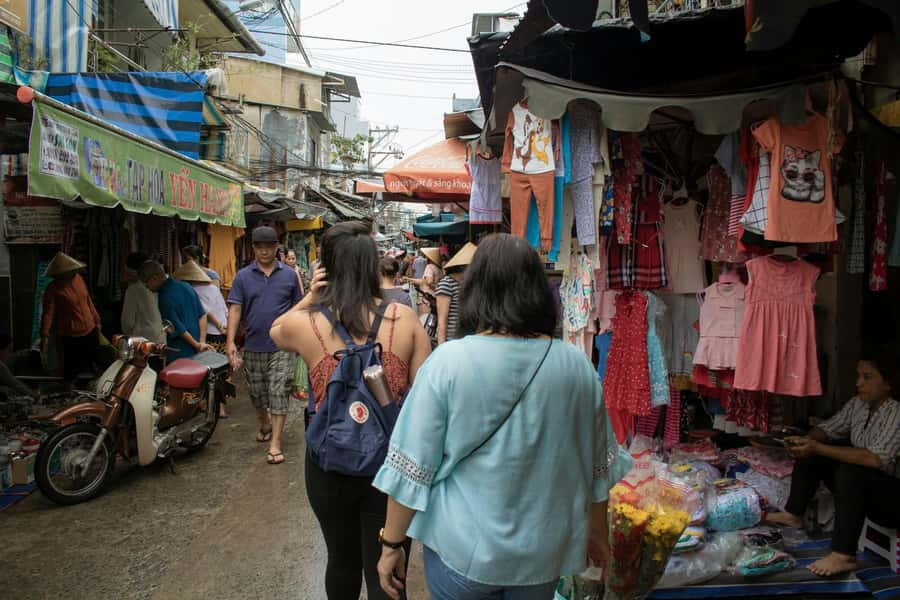
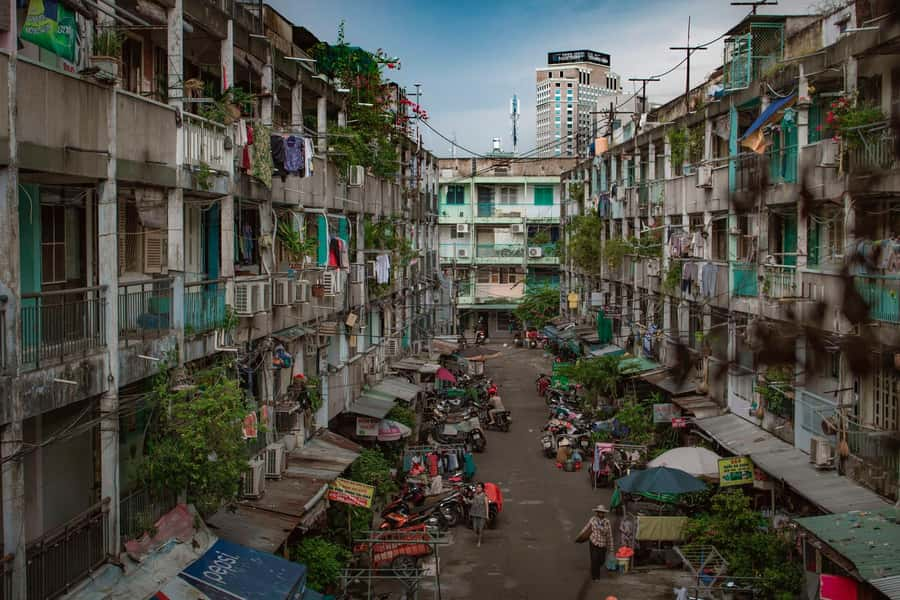
From the monument, the ride heads away from the usual sightseeing circuit. You pass through old communist-era ghettos and slum areas, with your guide explaining daily life and the sharp contrasts between modern Saigon and its poorer neighborhoods.
This is one of the tour’s most distinctive elements, but it also needs the right attitude. You are not entering a staged attraction. You are passing through living districts, so photography should be respectful and guided by local advice. The value comes from seeing how different parts of the city fit together, not from treating hardship as a backdrop.
The motorbike is especially useful here. A larger vehicle would struggle with narrow lanes and would separate you from the street. On the back of a scooter, you can reach places that would take much longer by car and move between districts without spending the whole tour in traffic.
The ride segments are listed at roughly 30 minutes, though the exact time can vary with traffic and the pace of the visit. Saigon traffic can be intense. You will need to sit securely, follow your driver’s instructions, and accept that the ride may feel lively rather than calm. Rain can also appear quickly, which is why ponchos are supplied.
More Motorcycle Tours around Ho Chi Minh City:
- Ho Chi Minh City Street Food Tour & Sightseeing By Motorbike
★ 5.0 · 9,413 reviews - Saigon By Night and Street Food By Motorbike | Opt: Ao Dai Riders
★ 5.0 · 4,066 reviews - Private Street Food Tour by Motorbike/Car with Local Students
★ 5.0 · 3,950 reviews - Saigon: Street Food Tasting & Sightseeing Tour by Motorbike
★ 4.9 · 3,578 reviews
Coffee at an 80-year-old family café
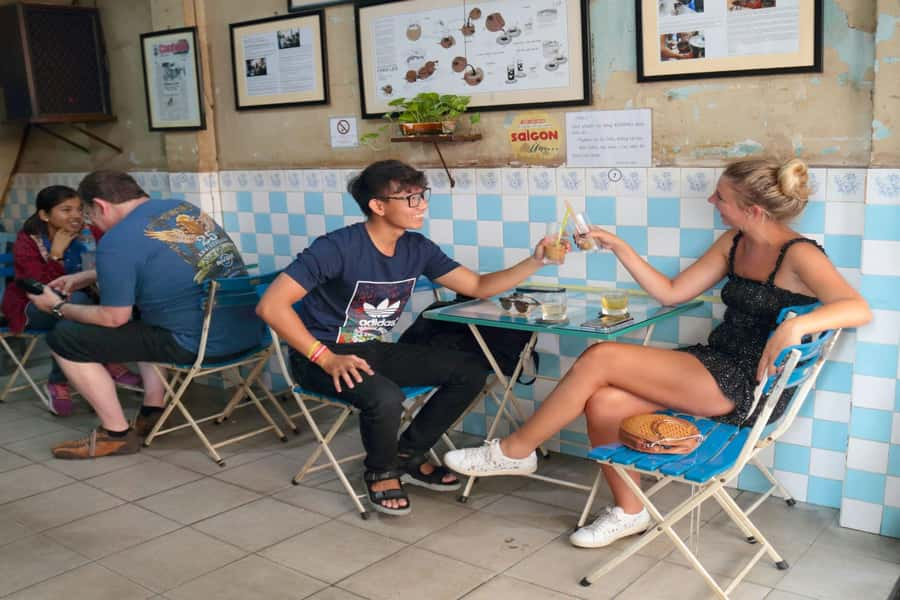
The café stop is a welcome pause after the traffic and the serious history. You stop at a family-run café said to be about 80 years old and taste traditional Vietnamese coffee.
The coffee is likely to be strong and sweet, and a sugar cane juice or bottled water is included. Other food, drinks, or snacks are extra, so do not treat the included drink as a full meal. The stop is as much about conversation as caffeine. Your guide can explain how locals drink coffee and answer questions about Saigon life.
I like this part because it slows the tour down. You are not simply collecting sights. You have a chair, a drink, and time to talk with the person driving you around the city. Guides such as Den and Sang have been praised for speaking clear English and chatting comfortably about life in Vietnam, not just repeating prepared facts.
A half-hour is enough for a drink and conversation, though coffee lovers may wish it lasted longer. If you are sensitive to strong coffee, ask what is being served before finishing the cup. The sugar cane juice or bottled water gives you another option.
Ten Thousand Buddhas Monastery
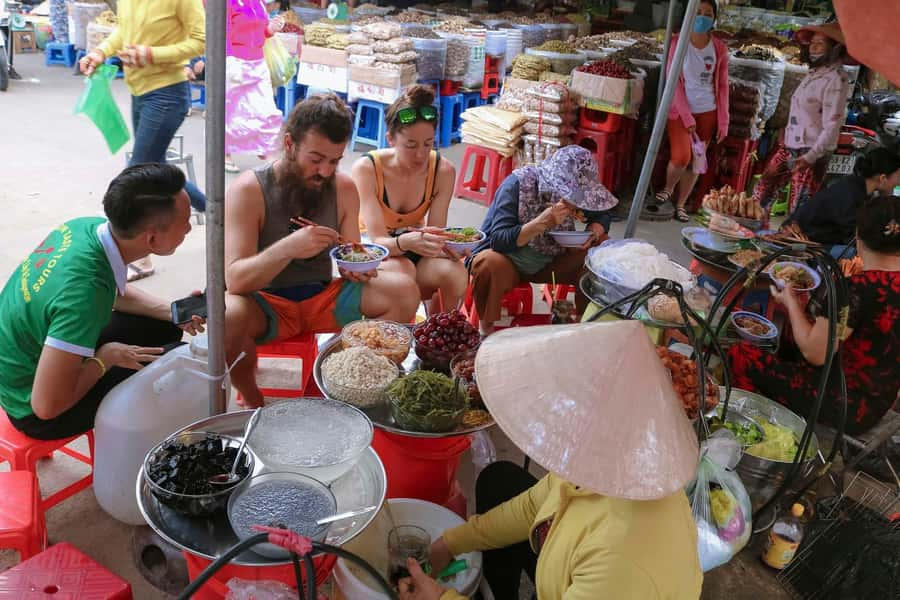
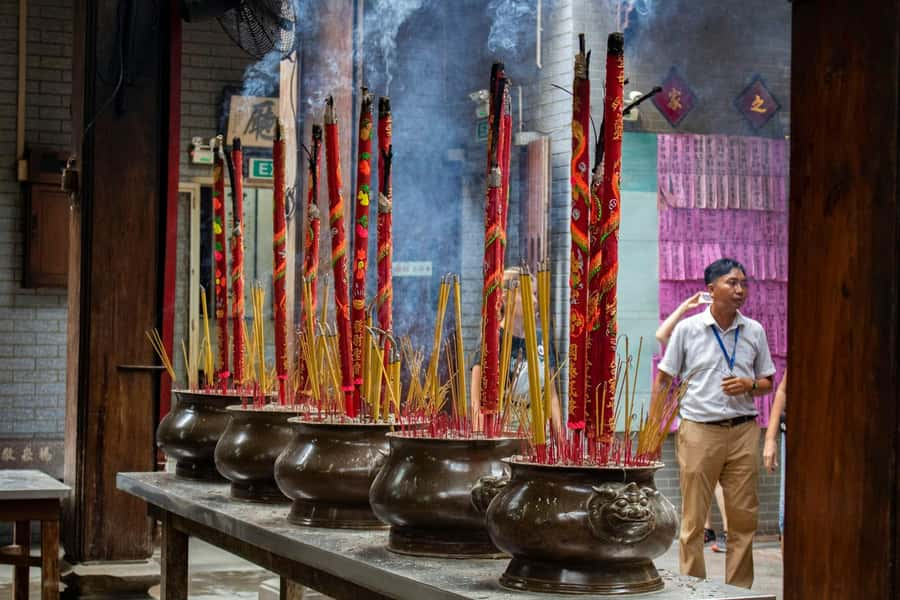
The monastery offers a sharp change of mood. After the street noise, you enter a quieter religious setting filled with thousands of Buddha statues. The scale of the collection is the main attraction, but the calm atmosphere matters just as much.
Your guide leads the visit and explains what you are seeing. The monastery is not presented as a grand museum, so dress and behave respectfully. Keep your voice down, follow local instructions, and ask before taking photographs in sensitive areas.
This stop suits people who enjoy places of worship more than polished tourist sites. It may feel less immediately dramatic than a major palace or cathedral, but it gives you a look at the city’s Buddhist life. Franziska’s group particularly enjoyed the temple visit, and the guides were able to explain the setting while also sharing pieces of their own lives.
The planned visit is around 30 minutes. That is enough time to look closely, ask questions, and take in the rows of figures without turning the visit into a long religious lecture.
Chợ Lớn, Bình Tây Market, and Chinatown
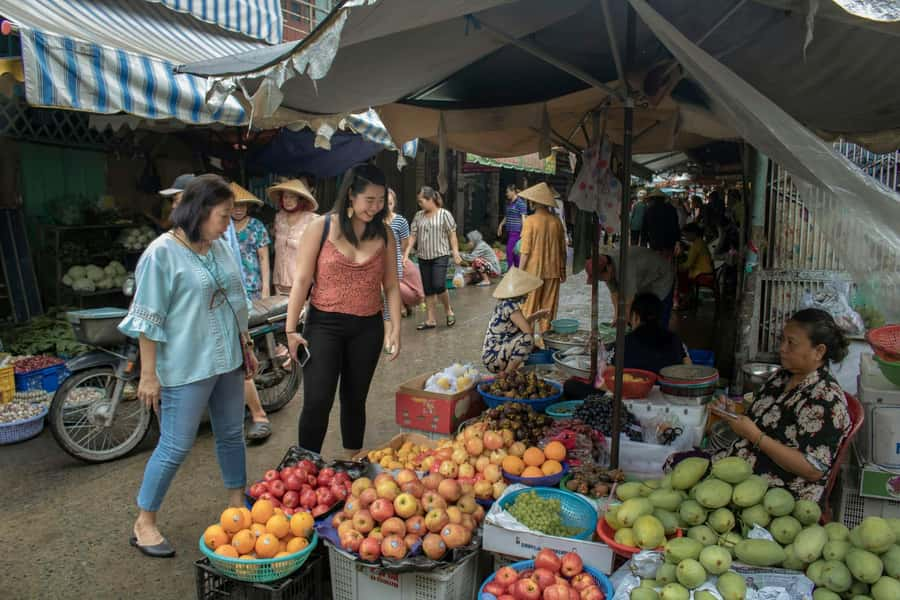
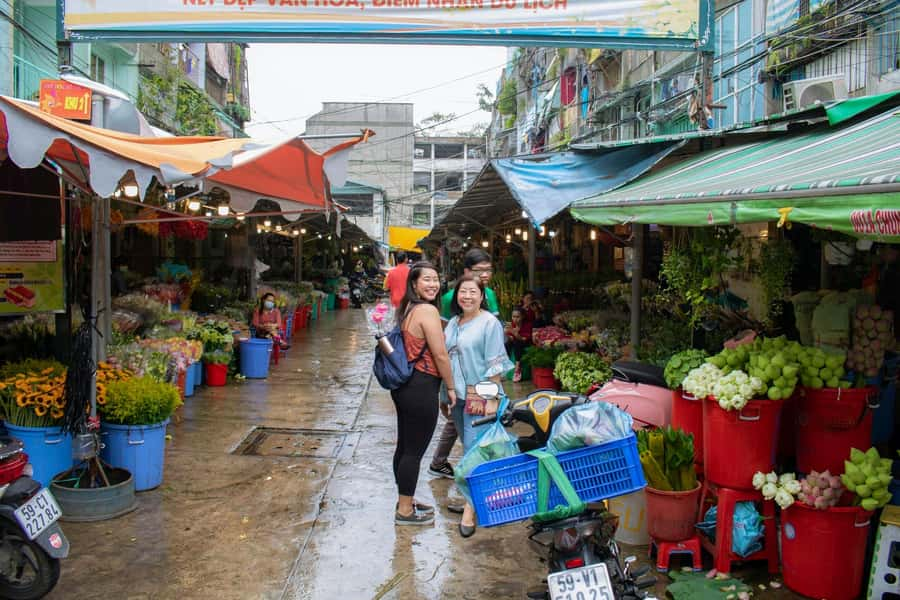
The ride then moves into Chợ Lớn, Saigon’s Chinatown. This is one of the strongest sections for people who like markets, food culture, traditional medicine, temples, and older urban buildings.
Bình Tây Market is the main stop. You have time to walk, look at the merchandise, and take in the market’s working rhythm. This is a place for observation as much as shopping. You might see goods being moved, local trade taking place, and shopkeepers handling the day’s business. The guide helps you understand what you are seeing and can point out details that are easy to miss alone.
Chinatown also brings traditional medicine shops, temples, and colonial-era buildings into the route. The setting is busy, but not in the staged way of a purpose-built attraction. It is a functioning district, so the experience can feel crowded, noisy, and less tidy than central Saigon.
That is also the drawback. If you dislike markets or narrow streets, this portion may feel tiring. If you enjoy seeing how a city works, it may be the most rewarding section of the tour. The motorbike makes it easier to cover more ground than you could on foot in four hours.
Food is not listed as part of the included package. You can buy items yourself, but plan to pay directly for anything beyond the supplied drink. One past solo participant added lunch during the route, but that is not guaranteed and should not be assumed as part of the standard experience.
The Saigon River finish
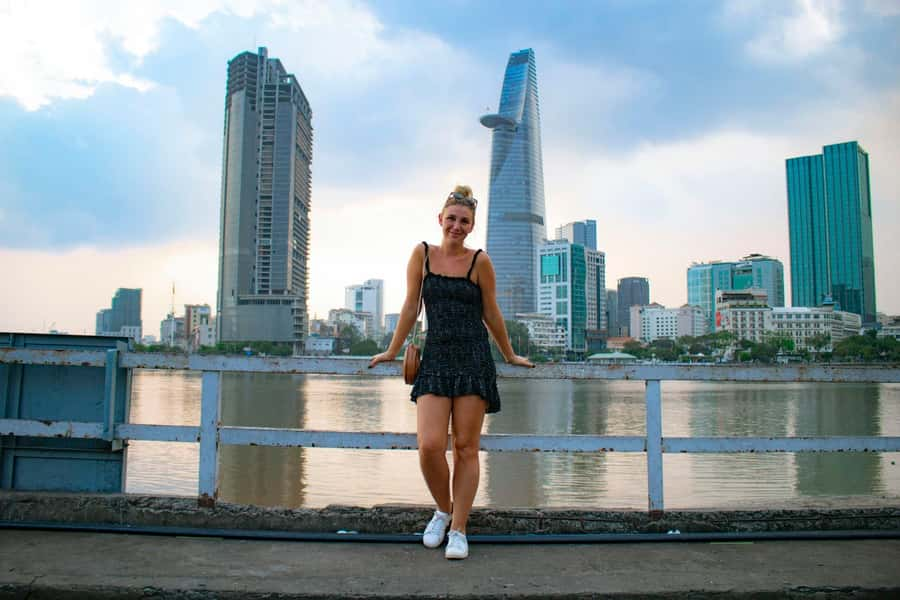
The final ride heads toward the Saigon River. After temples, markets, alleys, and traffic, the river provides open space and a cooler breeze. It is a useful ending because you have time to pause and reflect instead of finishing in another crowded street.
You can take photographs and enjoy the views before being dropped at your hotel or another agreed location in Districts 1, 3, or 4. The river stop is listed as a viewpoint and sightseeing stop, with about 30 minutes for the visit and ride.
Do not expect a long waterfront cruise or a formal sunset program. This is a land-based viewpoint reached by motorbike. Its value is the change in pace and the chance to finish outdoors.
Safety, comfort, and what to wear
A helmet is provided for every rider, along with a rain poncho and accident insurance. The drivers and English-speaking guides handle the scooters, so you do not need a Vietnamese license or riding experience for the tour.
Still, this is not a quiet bus excursion. Saigon traffic can look chaotic, and the ride may feel close to cars, buses, and other motorbikes. Josh specifically appreciated Eli’s patience because he felt nervous about riding. If you share that concern, say so at the start and ask your guide to explain how to sit, hold on, and signal discomfort.
Wear light clothing and secure shoes. Loose items can be awkward on a motorbike, and you will want to keep phones and cameras protected during the ride. The itinerary includes temples and religious sites, so modest clothing is the safer choice.
Weather may affect the feel of the experience. Rain does not automatically stop the tour because ponchos are supplied, but wet streets and gray skies can make riding less comfortable. A dry day will give you better conditions for photographs at the church, market, and river.
Is $34 good value?
At $34 per person, this is a strong value if you want transport, a private group, an English-speaking guide, and access to several parts of Saigon that are awkward to combine independently.
You are paying for four hours of driver-guide service, not just entrance to a series of attractions. The cost covers the scooters, helmets, ponchos, one sugar cane juice or bottled water, and accident insurance. The coffee is part of the experience, while additional food and drinks cost extra.
The private format improves the value for couples, families with older children, and solo visitors who want the route adjusted around their interests. A large group might be cheaper, but it would be harder to ask questions or change the pace. The tour also saves you from arranging separate rides between District 1, the monument, the monastery, Chinatown, and the river.
The price is less appealing if you are looking only for famous central landmarks or if you dislike motorbikes. You could visit some major sights on foot or by taxi for less, but you would lose the local traffic experience and the guide’s personal explanations.
Who should book this experience?
I would choose this tour if you have already seen, or plan to see, Saigon’s main central landmarks and want a wider look at the city. It suits curious first-time visitors too, especially those who prefer neighborhoods, markets, temples, and conversation over a checklist of monuments.
It is also a good fit for solo visitors. The private setup lets the guide shape the route around your interests, and the motorbike covers more ground than walking. Couples and small groups who want a flexible half-day should also find the format practical.
I would hesitate if you are uncomfortable sitting on a motorbike, have trouble getting on and off scooters, or want a slow, air-conditioned ride. The tour includes busy traffic, poorer districts, market crowds, and weather exposure. Those are not flaws, but they are part of the deal.
The strongest guides appear to be the ones who combine safe driving with easy conversation. Names associated with especially personal and attentive guiding include Den, Eli, Kim, Sang, Emmy, Hani, and Soli. Guide assignments can change, so you should not book solely for one particular person unless the company confirms that person in advance.
Should you book it?
Book it if you want to see Saigon from street level, meet a local guide, and visit places that do not fit neatly into a standard city tour. The best parts are the personal history at the Thich Quang Duc Monument, the old café, the monastery, and the ride through Chợ Lớn.
Skip it if scooter traffic sounds stressful or if your priority is major museums and grand colonial buildings. For everyone else, $34 buys a lively, varied four hours with practical transport and a useful look at Saigon beyond its postcard center.
FAQ
Where does the tour pick me up?
Pickup is available from hotels in Districts 1, 3, and 4. If you stay outside those districts, the meeting point is the Saigon Opera House in District 1.
How long does the motorbike tour last?
The experience lasts four hours. Starting times depend on availability when you book.
Do I drive the scooter myself?
No. Drivers operate the scooters, and English-speaking local guides accompany you.
What languages are available?
The tour is conducted in English.
What equipment and drinks are included?
Helmets, rain ponchos, scooters, driver-guides, accident insurance, and either sugar cane juice or bottled water are included.
Is coffee included?
The tour includes a stop at a local café for traditional Vietnamese coffee. Any other food, drinks, or snacks you choose to buy are at your own expense.
Can I cancel the booking?
You can cancel up to 24 hours in advance for a full refund. You can also reserve now and pay later.
Fresh off the road around Ho Chi Minh City
- Saigon Homies – Street Food Tour By Motorbike/Car/Walking★ 5.0 · 3 reviews
- Street Food Tour In Ho Chi Minh City By Motorbike★ 5.0 · 2 reviews
- Experience Saigon Cuisine: Food Tour by Motorbike or Car★ 5.0 · 7 reviews
- Saigon Half Day Shopping Tour by Motorbikes – KissTour★ 5.0 · 4 reviews
- Ho Chi Minh city Sightseeing or Midnight nightlife by motorbike★ 5.0 · 3 reviews
- Private Shore Excursion from Phu My Port: Food & Sights by Motorbike★ 5.0 · 10 reviews
- Ho Chi Minh City Street Food tour by Motorbike at night★ 5.0 · 2 reviews
- Food Tour by motorbike with local students★ 5.0 · 7 reviews
Ho Chi Minh City Motorcycle Tours, compared.
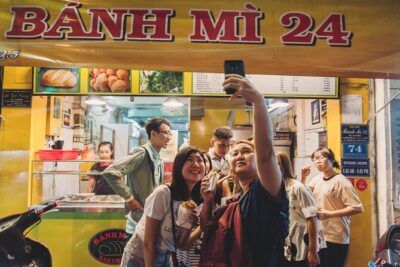
Ho Chi Minh City Street Food Tour & Sightseeing By Motorbike
Read our review →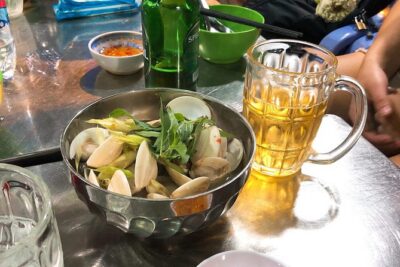
Saigon By Night and Street Food By Motorbike | Opt: Ao Dai Riders
Read our review →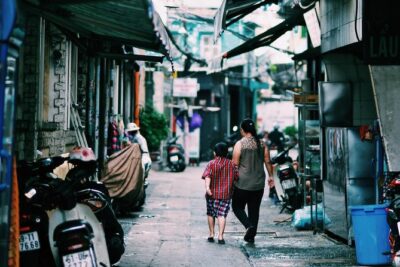
Private Street Food Tour by Motorbike/Car with Local Students
Read our review →
Street Food Tasting & Sightseeing Tour by Motorbike
Read our review →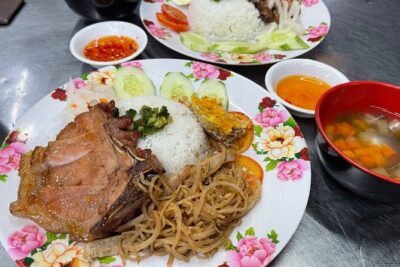
Top Notch Street Food Motorbike Tour In Ho Chi Minh City
Read our review →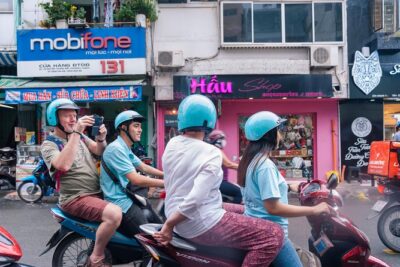
Ho Chi Minh City Motorbike Tour with Student | Saigon Adventure
Read our review →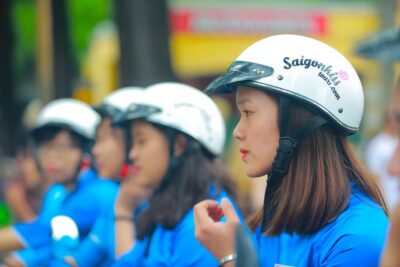
Ho Chi Minh Night Tour by Motorbikes with Female Rider | KissTour
Read our review →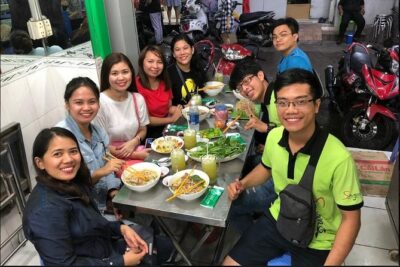
Saigon Night Sights & Local Food by Motorbike| Opt: Ao Dai Riders
Read our review →Browse the lists this tour appears in