
Review · LISBON
Lisbon Historic – Private Vintage Sidecar Tour
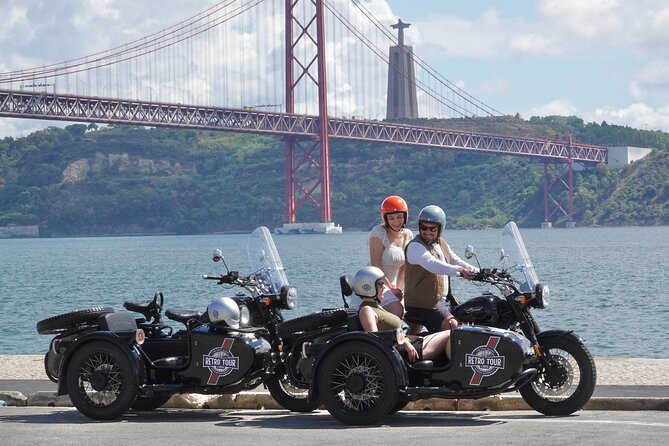
Lisbon’s hills and tight old streets make a vintage sidecar a clever way to get your bearings. This private ride packs major sights, rooftop viewpoints, old churches, and central squares into about an hour, without tying up half your day. You sit close to the guide, so the route feels personal rather than like a standard bus circuit.
I like the small private format and the chance to see a lot without walking every steep street. I also like the human touches: one guide offered coffee and local sweets during the break, and even stretched the ride a little when time allowed. The main drawback is simple: one hour goes quickly, so most stops are for looking and listening, not full visits.
Key points at a glance
- A vintage sidecar for two: The $155.42 price covers your private group, making the cost about $77.71 per person if two people share it.
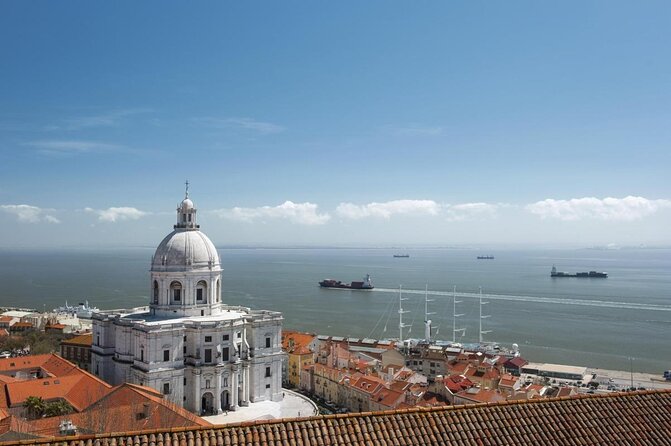
- A strong first-look route: You pass Praça do Comércio, Carmo, Rossio, Baixa, the cathedral, Alfama viewpoints, and the National Pantheon.
- Views come with a breeze: The ride gives you quick access to high lookouts and colorful rooftops without a long uphill walk.
- Personal service: The guide helps with getting in and out, and pickup is offered.
- Back at the starting point: The tour begins at Rua Garrett 88 and returns there at the end.
- Best for short stays: It works especially well on a first day in Lisbon or during a brief city visit.
Why a Lisbon sidecar makes sense
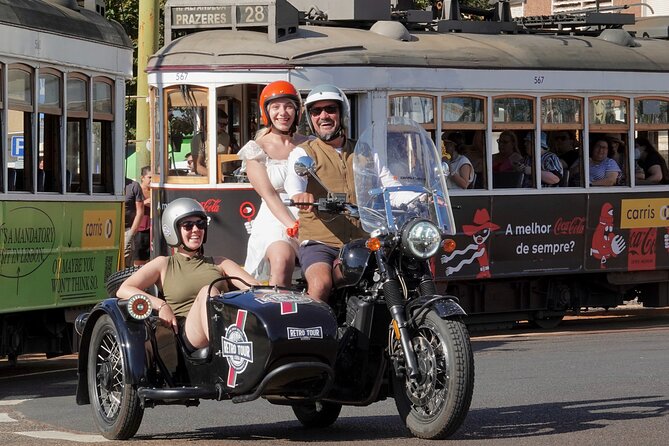
Lisbon is easy to admire and surprisingly tiring to cross. The center runs from the broad riverfront up through Baixa and into old hillside districts. A one-hour sidecar ride gives you a quick visual map of the city: grand squares below, church ruins and old lanes in the middle, and lookout points above.
The vintage vehicle is part of the appeal, but it is also practical. You are not sealed behind glass, so you can see street life and building details more clearly. At the same time, you avoid spending the whole morning climbing from one sight to the next.
This is a private activity for up to two people. That matters if you want to ask questions, adjust the pace, or simply share the ride with one companion. It is not the right choice if you want long interior visits or a full historical lecture at every stop. Think of it as a moving introduction to Lisbon, with several short pauses.
More Sidecar Tours in the world:
- Barcelona Private Tour by Sidecar Motorcycle
★ 5.0 · 1,750 reviews - Paris Vintage Private City Tour on a Sidecar Motorcycle
★ 5.0 · 417 reviews - Paris Highlights city tour on a vintage Sidecar Motorcycle
★ 5.0 · 168 reviews
Starting on Rua Garrett
The meeting point is at Rua Garrett 88, in central Lisbon. The route returns to this same point, which makes the experience easy to fit before lunch, dinner, or another booking.
Pickup is offered, though the listed starting point remains Rua Garrett. Confirm the pickup details when booking if you do not plan to meet there. Confirmation arrives at booking, and the experience is offered in English. A French-speaking guide was also available for one passenger, so it is worth asking about language if that matters to you.
The sidecar requires some care when getting in and out. One guide helped passengers with this, which is useful for anyone who feels uncertain about the vehicle. The activity is listed for people from 4 to 99 years old and for less than 150 kilograms per person.
Praça do Comércio and the riverfront opening
The first stop is Praça do Comércio, Lisbon’s great riverfront square. Its broad open space makes an immediate contrast with the narrow streets farther uphill. You get a few minutes here, enough to take in the arcaded buildings and understand why this is one of the city’s defining public spaces.
The stop is free, but the short timing tells you how to approach the whole tour. You will pause, look, and hear the guide’s explanation, then move on. If you want photographs of the square from several angles, you may need to return later on foot.
The route also returns to Praça do Comércio near the end, with a reference to the fire that damaged the square in 1988 and its reconstruction by architect Álvaro Siza Vieira. That gives the place a modern chapter alongside its older royal and commercial associations.
Carmo Church and Lisbon’s earthquake story
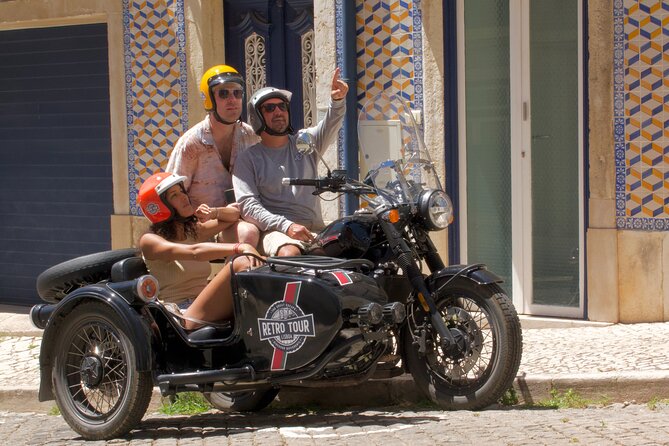
The Gothic ruins of Carmo Church are among the most memorable sights on this route. The roofless church leaves its arches open to the sky, creating a sharp reminder of Lisbon’s earthquakes and changing fortunes. The site houses an archaeological collection, though the one-hour ride does not allow time for a full museum visit.
You should see this stop as a visual introduction rather than a ticketed entrance. The broken stonework is easy to appreciate quickly, and the guide can connect the ruins to the city’s wider story. If Carmo is high on your list, return independently when you can spend more time with the collection.
More Vintage and Classic Motorcycle Tours around the world:
- Hanoi Motorbike Tour: Food, Culture and Fun by Vintage Motorbike
★ 5.0 · 6,699 reviews - VIETNAM BACKSTREET TOURS: Explore Bat Trang Ceramic Village By Minsk Motorcycle
★ 5.0 · 228 reviews - 2hr Retro Motorcycle Sidecar Oslo Highlights Tour
★ 5.0 · 115 reviews - Hanoi Food, Culture, Sightseeing & Fun By Vintage Motorbike
★ 5.0 · 86 reviews
High viewpoints and colorful rooftops

Lisbon’s lookout points are a major reason to choose this tour. From above, the city’s tiled roofs, church domes, and hills make more sense than they do from street level. The route includes a high viewpoint over the city, along with another point dedicated to poet Sophia de Mello Breyner Andresen, who died in 2004.
These pauses help break up the ride. You are not only passing buildings from the sidecar. You also get moments to stop, turn around, and take in the city’s shape.
The views are weather dependent, of course, and the stops are brief. Bring your camera, but do not expect a long photography session. The value is in seeing how Lisbon fits together, especially if this is your first visit.
Gardens, kiosks, and a slower Lisbon
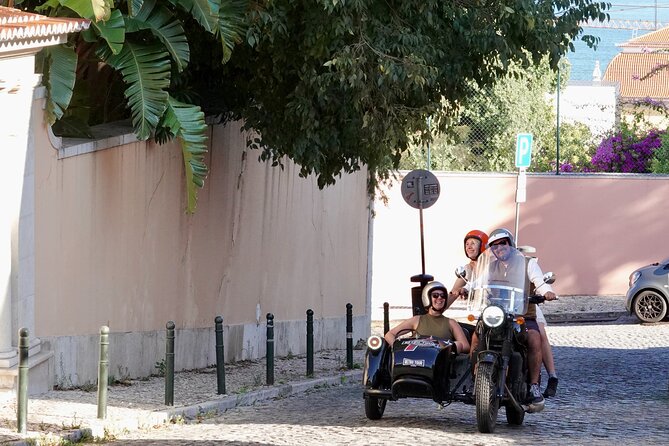
One stop takes you to beautiful gardens with unusual trees, including ironwood, cheese, or kapok trees, and one of Lisbon’s familiar kiosks. These kiosks are part of everyday city life, places where you can pause with a drink and watch Lisbon move around you.
This is one of the more pleasant details in the route because it offers something beyond monuments. The guide may provide a short break here, and one passenger received coffee cups and local sweets. That small gesture added warmth to the experience and made the pause feel less rushed.
Still, keep the timing in mind. The tour lasts about an hour, so you are unlikely to settle in for a long café break. If you want to spend time at the kiosk, treat the sidecar ride as a preview and return later.
Liberty Avenue, Rossio, and Baixa
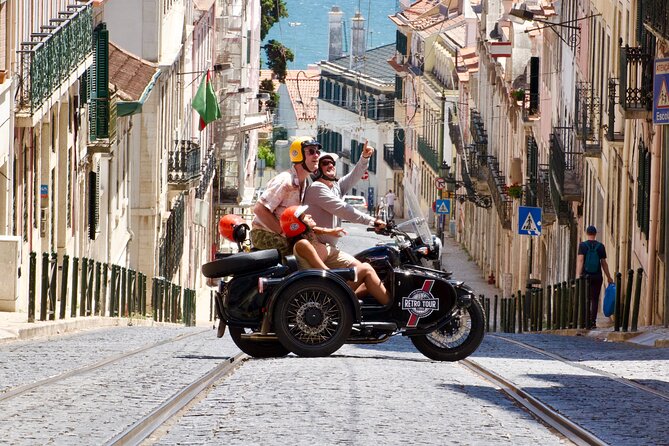
The ride continues along Liberty Avenue, one of Lisbon’s grandest routes, toward the Baixa district. Its broad scale and formal design contrast with the older, more uneven streets around the hills.
At Rossio, you pass a square tied to shopping, public life, and history. The National Theatre sits here, on the site of the former court of the Inquisition. In April and May, the purple jacaranda trees add a seasonal splash of color, though your experience will naturally depend on the date of your visit.
Baixa gives the guide a chance to explain Lisbon’s rebuilding after the 1755 earthquake. The district was planned under the Marquis of Pombal, with a regular street grid designed to make the center more organized and better able to withstand future tremors.
I like this part of the route because the streets themselves become the lesson. You do not need to enter a museum to see the planning. Look down the long, straight avenues and compare them with the winding streets higher up.
Lisbon Cathedral and the old city edge
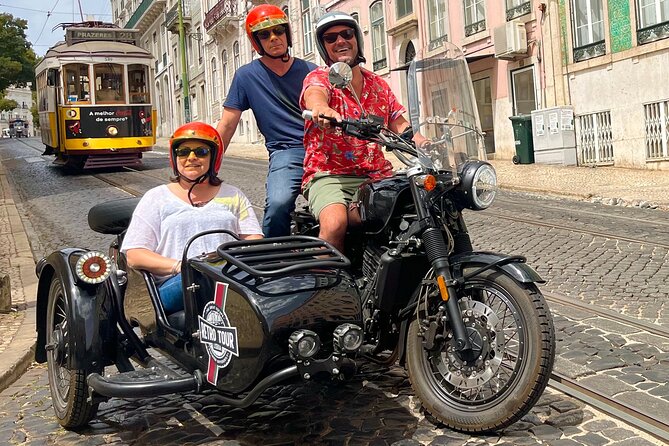
The cathedral dates back to a church built around 1150 and became a cathedral in 1250. Its setting near the old Muslim quarter gives the stop added weight. Archaeological remains in the cloister point to earlier Roman civilization, showing how several periods sit close together in Lisbon.
The sidecar can bring you near this dense historic area without making you walk the entire climb from Baixa. You will likely get an outside view and an explanation rather than a full cathedral visit. That is useful for orientation, but plan a separate visit if you want to see the interior and cloister carefully.
This is also where the tour’s short duration becomes most noticeable. Lisbon’s oldest districts reward patience. The ride gives you the outline, while a later walk lets you explore the details.
A church, a palace, and La Fontaine’s fables
Another stop features an old church that has changed substantially over time. The building is also connected with Portugal’s last dynasty, the Braganzas, and contains about thirty panels illustrating La Fontaine’s fables.
That combination is unusual. You get religion, royal history, and decorative art in one place. It is exactly the sort of detail that is easy to miss if you only follow the biggest sights.
The description does not promise an interior visit during the ride, so think of this as a passing introduction. Note the location and return if the panels or Braganza connection interest you.
The National Pantheon and Feira da Ladra
The National Pantheon is one of Lisbon’s most imposing monuments. Its dome is visible from a distance, and the interior contains the graves of notable Portuguese figures. Its neo-Manueline design and large scale make it an important stop even if you only see it from outside.
Nearby, the flea market brings a different mood. Street art meets old Lisbon traditions, and the area offers another view toward the National Pantheon. This shift from formal monument to market street gives the route variety.
Again, the timing is the tradeoff. You will not have time to browse every stall or study the pantheon at length. But the sidecar lets you connect these places quickly, then decide where you want to return on foot.
What the $155.42 price really buys
The price is $155.42 per group of up to two people. For two, that works out to about $77.71 each. That is not the cheapest way to sightsee in Lisbon, but the comparison should be with a private experience, not a public tram ride.
You are paying for the vehicle, a private guide, a planned route, and the ability to see several districts in one hour. The value is strongest if you have limited time, want a memorable first look, or prefer not to share the ride with strangers.
The value is weaker if you want long stops, museum admissions, or detailed walking tours. No admission tickets are included in the information provided, and the stops appear designed mainly for views and commentary. I would book it as an orientation ride, then choose one or two places to revisit independently.
Who will enjoy this ride most
This tour suits couples, friends, and parent-child pairs who want a private introduction to Lisbon. It is also useful for people who find the city’s hills tiring but still want to see the older districts and high viewpoints.
It works well near the start of a short stay. After the ride, you will have a clearer sense of where Baixa, Rossio, the cathedral, Alfama, and the riverfront sit in relation to one another.
You should think twice if you dislike open-air vehicles, need extensive time at each monument, or want a highly specialized history tour. The sidecar is the experience, and the sights are the fast-moving framework around it.
The ride is listed as accessible to service animals, near public transportation, and suitable for most participants. The stated age range is 4 to 99, with a limit of less than 150 kilograms per person. Ask about any personal mobility concern before booking, since getting in and out of a sidecar may require assistance.
Should you book the Lisbon vintage sidecar tour?
Book it if you want a private, lively orientation to Lisbon and like the idea of seeing major sights from an unusual vehicle. The one-hour length is a real strength for a busy schedule, and the guide’s personal attention, help with boarding, coffee, and local sweets can make the ride feel more thoughtful than a simple transfer.
Skip it if you want to enter several monuments or spend serious time at the flea market, cathedral, Carmo Church, or National Pantheon. For most people, the best plan is to use this as your first look at Lisbon, then return to the places that catch your eye.
Free cancellation is available up to 24 hours before the local start time. Changes or cancellations made less than 24 hours before the experience are not accepted for a refund.
FAQ
Where does the tour start?
It starts at R. Garrett 88, 1200-204 Lisboa, Portugal.
Where does the tour end?
The activity ends back at the meeting point.
How long does the sidecar tour last?
The tour lasts approximately one hour.
How much does the experience cost?
The price is $155.42 per group of up to two people.
Is this a private tour?
Yes. Only your group participates.
Is pickup available?
Pickup is offered. The listed meeting point is Rua Garrett 88, so confirm pickup details when booking.
What language is offered?
The tour is offered in English. A French-speaking guide was also available for one booking.
What sights are included on the route?
The route includes Praça do Comércio, Carmo Church, high city viewpoints, gardens and a kiosk, Liberty Avenue, Rossio, Baixa, Lisbon Cathedral, a historic church linked with the Braganzas, the National Pantheon, a flea market, and Praça do Comércio again.
Is the experience suitable for children and older adults?
It is listed as suitable for ages 4 to 99.
What is the cancellation policy?
You can cancel up to 24 hours before the start time for a full refund. Cancellations or changes made less than 24 hours before the start time are not accepted for a refund.
More History Stops around the world
- Saigon Unseen, History, & Hidden Gems Sightseeing Motorbike Tour
★ 5.0 · 416 reviews - Hue Half-Day Motorbike Tour – Authentic Countryside of Vietnam, History, Culture
★ 5.0 · 143 reviews - Hue Motorbike & Boat Tour to Countryside & Heritage Sites
★ 5.0 · 35 reviews - Motorbike Day Tour from Hoi An History, Scenery and Beaches
★ 5.0 · 15 reviews
Fresh off the road around the world
- Saigon Homies – Street Food Tour By Motorbike/Car/Walking★ 5.0 · 3 reviews
- Street Food Tour In Ho Chi Minh City By Motorbike★ 5.0 · 2 reviews
- Experience Saigon Cuisine: Food Tour by Motorbike or Car★ 5.0 · 7 reviews
- Saigon Half Day Shopping Tour by Motorbikes – KissTour★ 5.0 · 4 reviews
- Ho Chi Minh city Sightseeing or Midnight nightlife by motorbike★ 5.0 · 3 reviews
- Private Shore Excursion from Phu My Port: Food & Sights by Motorbike★ 5.0 · 10 reviews
- Ho Chi Minh City Street Food tour by Motorbike at night★ 5.0 · 2 reviews
- Food Tour by motorbike with local students★ 5.0 · 7 reviews
Lisbon Motorcycle Tours, compared.


Lisbon Half-Day Handpicked – Private Vintage Sidecar Experience
Read our review →

Browse the lists this tour appears in