
Review · HO CHI MINH CITY
Ho Chi Minh City: Hidden Gems & Back Alleys by Motorbike with Local Students
The most revealing way to see Ho Chi Minh City is often from the back of a motorbike, where main roads quickly give way to narrow lanes, market stalls, old apartments, and ordinary daily life. This tour takes you to Thich Quang Duc’s monument, the Nguyen Thien Thuat apartment area, Ho Thi Ky flower market, and a pagoda filled with thousands of Buddha statues.
I like the small private format and the chance to talk with a local student over Vietnamese coffee rather than simply follow a guide holding a flag. I also like the variety: this is part history lesson, part food-market wander, part neighborhood ride. The main consideration is the traffic. You sit behind the driver, so you need to feel comfortable on a motorbike and with the quick flow of Saigon streets.
Key points at a glance
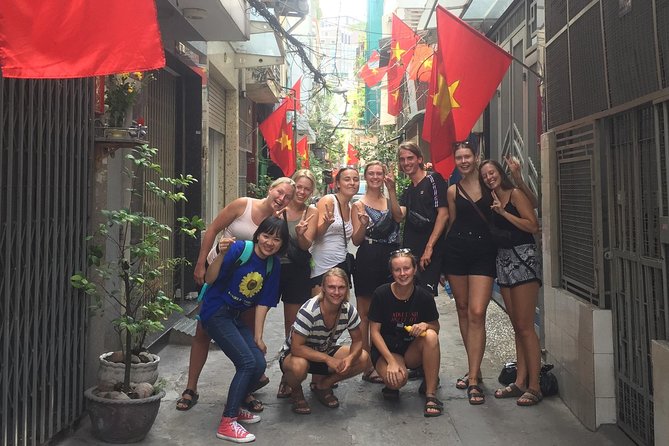
- A private ride with local student guides: Your group travels with English-speaking drivers rather than being folded into a large coach tour.
- Seven different sides of Saigon: Expect a monument, old apartment buildings, flower and wet markets, a pagoda, Chinatown, and a coffee stop.
- A useful history lesson: Thich Quang Duc’s monument introduces one of the most painful episodes in modern South Vietnamese history.
- Real neighborhood access: The tour reaches narrow alleys and market areas that standard bus and car sightseeing usually cannot reach.
- Coffee and water are included: The final café stop gives you time to talk with your guide and ask about life in the city.
- Three hours, with hotel pickup: Pickup and drop-off are free in Districts 1, 3, 4, and 10, or at the Saigon Opera House.
Why a motorbike is the right tool for this Saigon tour
Ho Chi Minh City is not best understood from a sealed vehicle. A car can carry you between major sights, but it cannot easily enter the narrow lanes where much of local life takes place. On this tour, your driver takes you through main roads first, then into smaller passages where homes, shops, markets, and older apartment blocks sit close together.
You are not driving. You sit behind an English-speaking local guide, with fuel and a high-quality open-face helmet included. At the beginning, the guide explains how to sit properly and makes sure you feel comfortable before heading into traffic.
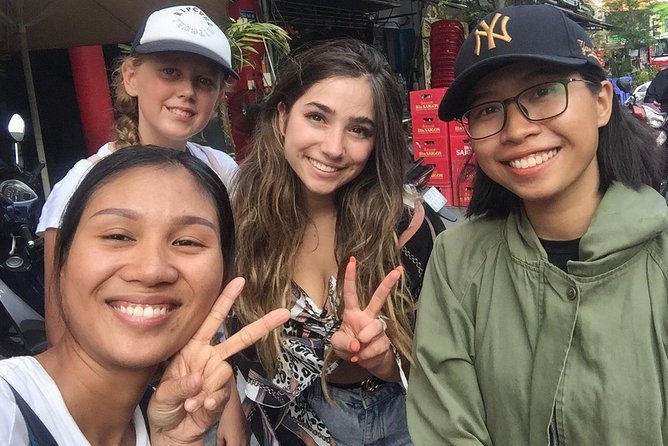
That small introduction matters. You still need to be willing to ride through busy streets, but you are not expected to know how to handle the motorbike yourself. The guides are described as young local students, and names associated with previous bookings include Heidi, Thao, and Quang. Guide assignments can change, but the format gives you a chance to meet someone who knows the city as a resident and student.
This is a private activity, so only your own group takes part. That makes it easier to ask questions, request a little more time at a market, or talk about subjects that interest you. The ride lasts about three hours, long enough to see several parts of the city without consuming a full day.
More Motorcycle Tours around Ho Chi Minh City:
- Ho Chi Minh City Street Food Tour & Sightseeing By Motorbike
★ 5.0 · 9,413 reviews - Saigon By Night and Street Food By Motorbike | Opt: Ao Dai Riders
★ 5.0 · 4,066 reviews - Private Street Food Tour by Motorbike/Car with Local Students
★ 5.0 · 3,950 reviews
Thich Quang Duc’s monument and a difficult chapter of history
The first stop is a green memorial park dedicated to the Venerable Thich Quang Duc. The large statue and relief show the monk who set himself on fire in 1963 to protest the treatment of Buddhists by the South Vietnamese government under President Ngo Dinh Diem.
This is not a light opening stop, but it gives the tour weight. You begin with an important event rather than a quick photo at a famous building. Your guide explains the political and religious tensions behind the act, helping you understand why the monument matters.
You have about 20 minutes here, with admission included. That is enough time to look closely at the statue and relief and listen to the account without turning the visit into a long lecture. I appreciate that the stop is often missed by standard sightseeing routes. It shows how a short motorbike tour can add context that a list of major landmarks may leave out.
Because the subject is painful, your guide’s explanation matters. The supplied information promises an introduction to the story, but it does not specify how detailed each guide’s presentation will be. If this part interests you, ask questions. The private setting gives you room to do that.
Nguyen Thien Thuat, where an older Saigon survives
Next comes the Nguyen Thien Thuat apartment area, dating from 1969. The tour presents it as a chance to see how people in Saigon lived around 50 years ago, with small apartments, wrought iron windows, wooden louver shutters, cement tiles, and older structural materials still in place.
This stop is valuable because it is not a polished museum. You see an inhabited residential area, where the appeal lies in its age, layout, and everyday use. The architecture gives you a sense of the city before modern towers and renovated commercial spaces became common sights.
Allow about 20 minutes. You will likely spend that time walking through the area and listening to your guide explain what has changed and what has remained. The tour does not promise entry into private homes, so think of this as a respectful look at the building exterior and shared spaces rather than a house visit.
I like this stop for its modest scale. It does not ask you to admire a grand monument. Instead, it helps you notice shutters, balconies, tiles, and narrow passages, the details that make a city feel lived-in.
Ho Thi Ky flower market and the nearby wet market
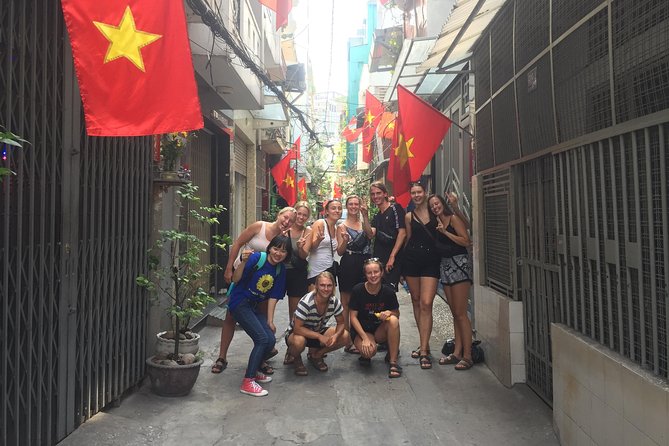
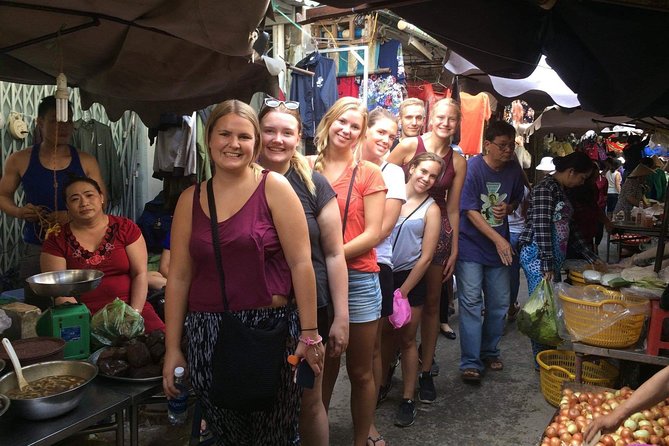
Ho Thi Ky is the liveliest part of the route. The biggest wholesale flower market is spread through alleys around Ho Thi Ky Street rather than confined to one large building. You walk among lines of flowers and see how deliveries and sales keep the market active.
The tour allows about 30 minutes for the flower market and the adjacent wet market. That is a sensible amount of time, since there is plenty to look at but the area is not a formal attraction with a fixed route. Your guide can help you move through the narrow lanes and explain what you are seeing.
The nearby wet market sells a broad mix of goods, including clothes, household items, raw food, live animals, pork organ meat, and street food. This is a working market, not a staged cultural display. You might find the sights and smells intense, especially if you are unused to Southeast Asian wet markets. That is part of the point, but it is also the clearest consideration for anyone sensitive to crowded food areas or unfamiliar ingredients.
The tour description encourages you to di cho, or go to the market, like local people. You are not promised a meal here, so do not book this expecting a dedicated food tasting. Instead, you get a close look at shopping and trading in a central Ho Chi Minh City neighborhood.
The flower market is also a useful reminder that the city’s commerce does not always happen in grand indoor halls. Narrow lanes can serve as major wholesale spaces, with activity continuing through the day and night. Keep your belongings secure and follow your guide’s lead as you walk, since the alleys can be tight.
Same roads, a different saddle:
- Saigon: Street Food Tasting & Sightseeing Tour by Motorbike
★ 4.9 · 3,578 reviews - Top Notch Street Food Motorbike Tour In Ho Chi Minh City
★ 5.0 · 2,667 reviews - Private Street Food Motorbike Tour in Ho Chi Minh City
★ 5.0 · 2,180 reviews - Ho Chi Minh City Motorbike Tour with Student | Saigon Adventure
★ 5.0 · 1,697 reviews
Chua Van Phat and the ten thousand Buddha statues
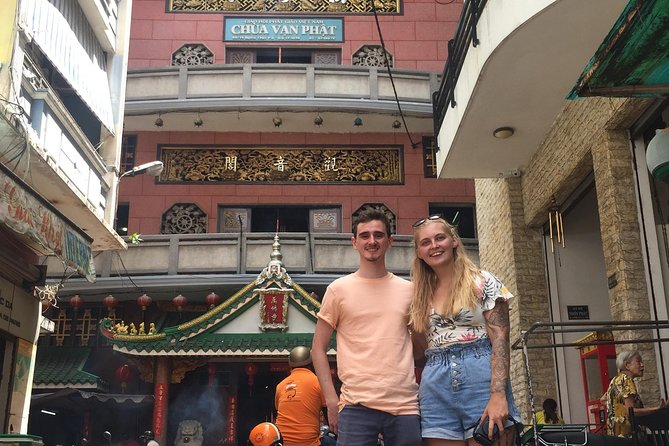
The fourth stop is Chua Van Phat, a small pagoda in a District 5 alley. Its name is associated with ten thousand Buddha statues, and the tour focuses on the many figures arranged in different sizes, gestures, and positions.
The description places statues in wall compartments and among the petals of a large lotus-shaped seat. That arrangement makes this more than a quick temple visit. You are looking at repetition, detail, and careful placement in a confined space, with something different to notice in nearly every section.
You have about 30 minutes here. Dress and behave respectfully at the pagoda, even though the tour information does not set out a formal dress code. Follow your guide’s instructions and avoid treating the religious setting as only a photo backdrop.
After the pagoda, the ride continues through District 5 and part of Saigon’s Chinatown. This portion helps connect the temple to the wider neighborhood. You see a trading district with its own character, rather than visiting one isolated religious building and immediately leaving.
The Chinatown section is described as a drive around part of the area, not a long walking tour. If you want a detailed account of every Chinese-Vietnamese landmark, this three-hour experience may feel brief. If your aim is to get a taste of District 5 and understand how it fits into the city, the motorbike format works well.
Vietnamese coffee and a conversation with your guide
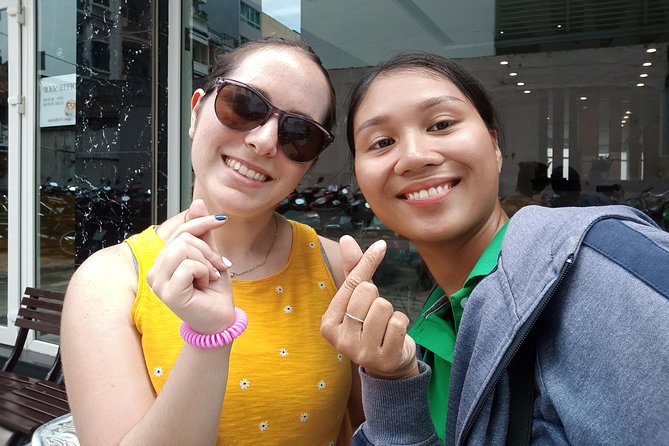
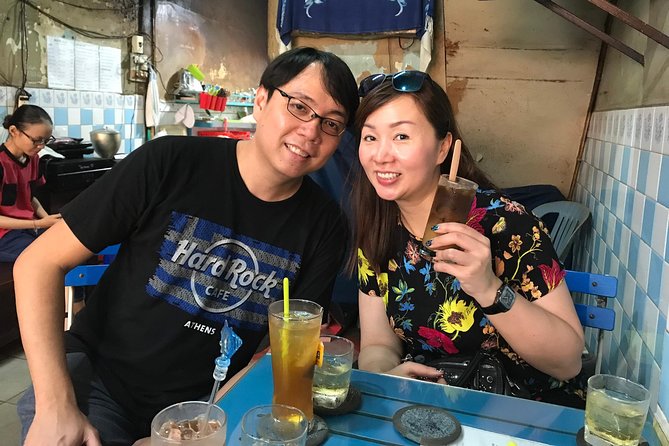
The final stop is a local coffee shop, where you have about 30 minutes to enjoy Vietnamese coffee and talk with your guide before returning to your hotel. The included drink is cafe sua da, Vietnamese coffee with condensed milk, along with mineral water.
This is more important than it may sound. The earlier stops give you facts and impressions, but coffee gives you time to connect the pieces. You can ask about student life, the city’s neighborhoods, the markets, or the places you passed without stopping.
Several strong comments about the experience focus on the guides’ friendliness, conversation, and English. Heidi is specifically praised for clear English, easy conversation, and a good understanding of the places visited. Thao and Quang are also named as guides who made the ride feel safe and interesting.
I would treat those names as examples rather than a guarantee of who you will meet. The provider assigns the guide, and the quality of the experience will partly depend on how well your interests match the person riding with you. Still, the coffee stop is a smart design choice. It prevents the tour from becoming a rapid chain of stops and gives you a relaxed ending.
Safety, comfort, and what the ride feels like
The tour includes transportation by motorbike, fuel, and an open-face helmet. Your guide explains how to sit before setting off. You should wear practical clothing and shoes that stay secure while riding, though the supplied details do not specify any required dress or footwear.
The route uses both main roads and narrow alleys. That means you will experience the city’s traffic directly, rather than viewing it from behind a bus window. The guides are described as expert drivers in the feedback, and people specifically valued feeling safe on the mopeds, but no road journey is entirely calm in a large Southeast Asian city.
If you have never ridden as a passenger on a motorbike, think carefully before booking. You need to sit behind the driver for roughly three hours, with stops along the way. Most people can participate, and service animals are allowed, but the provided information does not give details about mobility limitations, weight limits, child seating, or arrangements for people who cannot mount a motorbike.
The open-face helmet lets you see and feel more of the city than you would in a car. It also means you are exposed to the street environment. That is central to the experience, not a flaw, but it is worth considering if you prefer air-conditioned transport.
What $24 buys you

At $24 per person, this is strong value for a private three-hour activity. The price covers the guide, motorbike transportation, fuel, helmet, hotel pickup and drop-off in selected districts, mineral water, and Vietnamese coffee.
You are also paying for access to several separate parts of Ho Chi Minh City without arranging individual rides between them. A standard taxi route could take you to some of these places, but it would not automatically include local interpretation or a guide who shows you through the alleys.
Pickup and drop-off are free from hotels, apartments, houses, or Airbnb properties in Districts 1, 3, 4, and 10. You can also meet at the Saigon Opera House. If you need pickup or drop-off outside those districts, there is a $5 fee paid directly to the guide.
The tour is usually booked about 18 days ahead, which suggests you should reserve early if your schedule is fixed. Free cancellation is available up to 24 hours before the local start time. Cancellations or changes made less than 24 hours before departure are not refunded or accepted.
Gratuities are optional. Since the tour is private, you can also judge the service on a personal level rather than splitting attention among a large group.
Who should book this motorbike experience?
I would choose this tour for a first or second day in Ho Chi Minh City, especially if you want a quick orientation beyond the main central sights. It gives you history, architecture, markets, religion, Chinatown, and coffee in one compact route.
It suits curious adults and older children who are comfortable riding as passengers. It is also a good match for solo visitors and couples who value conversation. The private format means you can ask direct questions and get a more personal introduction to the city.
I would hesitate if you dislike motorbikes, crowded markets, or unstructured neighborhood exploration. The tour does not focus on grand colonial buildings, a long food crawl, or a single major museum. Its appeal is the connection between ordinary places and the guide’s explanations.
It is also worth remembering that the flower and wet market section may feel more raw than a polished sightseeing stop. That is precisely why it is memorable, but it will not suit everyone.
Should you book it?
Book this tour if you want to see Ho Chi Minh City through its lanes, markets, religious spaces, and residential areas rather than only its headline sights. The best parts are the private motorbike access, the student guides, the thoughtful variety of stops, and the unhurried coffee conversation at the end.
Skip it if you need enclosed transport, dislike riding through traffic, or want a highly structured historical tour with long visits at major monuments. For $24, though, it offers a lot: local transport, several unusual stops, drinks, and a personal guide for about three hours. If you are comfortable on a motorbike, this is an easy way to get a first feel for the city’s less polished and more revealing side.
FAQ
How long does the Ho Chi Minh City motorbike tour last?
The experience lasts approximately three hours, including the stops and the final coffee break.
Is the tour private?
Yes. Only your group participates in the activity.
What transportation is used?
You ride as a passenger on a motorbike operated by an English-speaking guide. Fuel and a high-quality open-face helmet are included.
Where is hotel pickup available?
Free pickup and drop-off are available at hotels, apartments, houses, or Airbnb properties in Districts 1, 3, 4, and 10. Pickup is also available at the Saigon Opera House.
Is there an extra pickup fee outside the listed districts?
Yes. Pickup or drop-off outside Districts 1, 3, 4, and 10 costs an additional $5, paid directly to the guide.
Is coffee included?
Yes. The tour includes Vietnamese cafe sua da and mineral water. The coffee is served during the final stop at a local café.
Can I cancel for a full refund?
Yes, if you cancel at least 24 hours before the experience start time. Cancellations or changes made less than 24 hours before the start time are not refunded or accepted.
Fresh off the road around Ho Chi Minh City
- Saigon Homies – Street Food Tour By Motorbike/Car/Walking★ 5.0 · 3 reviews
- Street Food Tour In Ho Chi Minh City By Motorbike★ 5.0 · 2 reviews
- Experience Saigon Cuisine: Food Tour by Motorbike or Car★ 5.0 · 7 reviews
- Saigon Half Day Shopping Tour by Motorbikes – KissTour★ 5.0 · 4 reviews
- Ho Chi Minh city Sightseeing or Midnight nightlife by motorbike★ 5.0 · 3 reviews
- Private Shore Excursion from Phu My Port: Food & Sights by Motorbike★ 5.0 · 10 reviews
- Food Tour by motorbike with local students★ 5.0 · 7 reviews
- Ho Chi Minh City Street Food tour by Motorbike at night★ 5.0 · 2 reviews
Ho Chi Minh City Motorcycle Tours, compared.
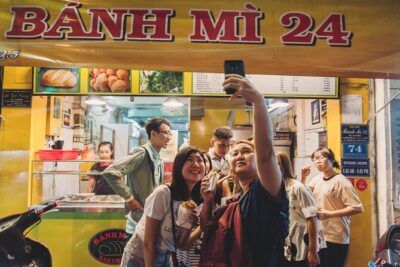
Ho Chi Minh City Street Food Tour & Sightseeing By Motorbike
Read our review →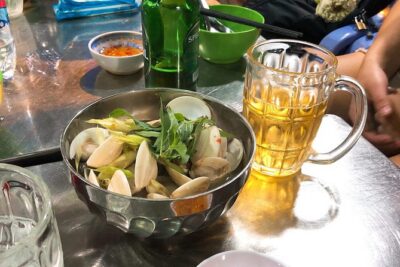
Saigon By Night and Street Food By Motorbike | Opt: Ao Dai Riders
Read our review →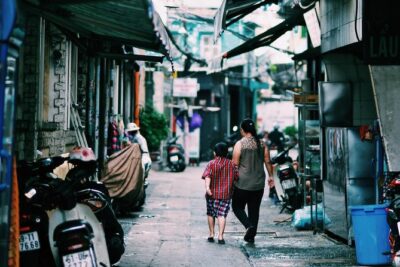
Private Street Food Tour by Motorbike/Car with Local Students
Read our review →
Street Food Tasting & Sightseeing Tour by Motorbike
Read our review →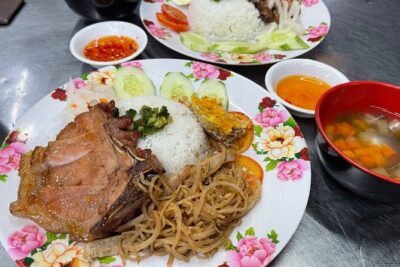
Top Notch Street Food Motorbike Tour In Ho Chi Minh City
Read our review →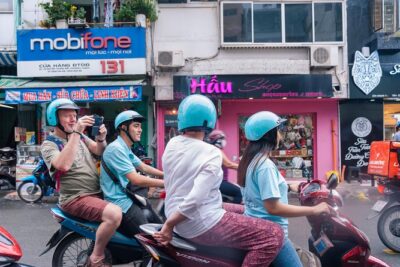
Ho Chi Minh City Motorbike Tour with Student | Saigon Adventure
Read our review →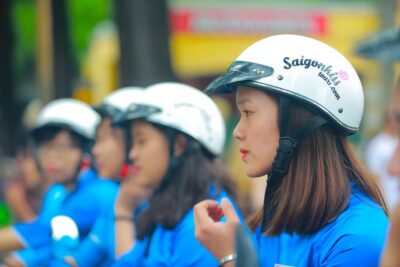
Ho Chi Minh Night Tour by Motorbikes with Female Rider | KissTour
Read our review →
Saigon Night Sights & Local Food by Motorbike| Opt: Ao Dai Riders
Read our review →Browse the lists this tour appears in